
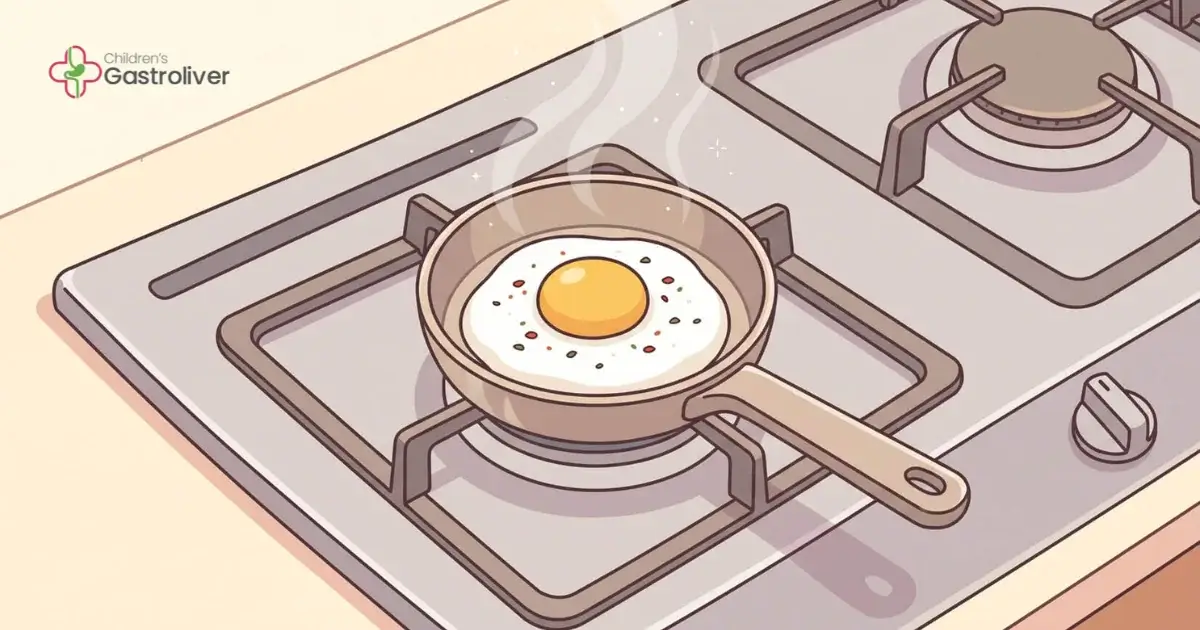
Short answer: Yes, eggs can be a regular part of a child's diet, as long as they are well cooked, served in a size and texture your child can handle, and your child has no egg allergy. In Dr. Rafia Rashid's home, a well-cooked egg is part of breakfast almost every day.
By Dr. Rafia Rashid, FCPS (Pediatrics), FCPS (Pediatric Gastroenterology & Nutrition)
Parents often ask what a pediatric gastroenterologist feeds her own family. This post shares one household's habits. It is an example, not a prescription. Every child is different, so use it as an idea and check with your child's doctor if your child has allergies or a medical condition.
Why eggs work well on a busy family table
Eggs are quick to cook, easy to find, and fit into most family meals. They are a good source of protein and also contain nutrients such as choline and vitamin B12 [1, 2]. They are also soft enough for many children to eat comfortably once they are cooked and cut properly.
Rule one: always well cooked
In our home, eggs are always cooked through. For children, this means the yolk is set, not runny. Raw or undercooked eggs can carry Salmonella, which can cause fever, vomiting and diarrhea, and children can become sicker than adults from it.
Practical tips:
- Buy eggs from a reliable, reputable source and check the shells for cracks.
- Wash your hands after handling raw eggs, and wash the pan, spoon and plate that touched them.
- Never give a child raw egg in any drink, dessert or home-made mayonnaise.
How we cook our breakfast egg
The 4-inch pan trick. A small 4-inch pan makes a neat, round egg with no effort, which children find more fun to eat.
A little butter. We use a small amount of butter in place of soyabean oil. This is a taste choice that makes the egg more enjoyable, not a medical claim. Keep the amount small.
Pan-poached, sunny-side-up style. Crack the egg into the buttered pan, keep the heat gentle, and cover with a lid until the yolk is firm for the children.
Flavor without fuss. A sprinkle of oregano adds fragrance. We sometimes use fresh oregano from our balcony plant. A small pinch of chili flakes adds a little kick. Keep the amount very small and suited to your child's age, and leave it out for babies and young toddlers.
Add a vegetable. For variety and color, we add:
- thinly cut carrot
- small squares of capsicum
- fresh button mushroom from the local market (we do not use canned mushrooms)
A tip for parents of toddlers: eggs as finger food
This one is not from our own table, but it is an idea Dr. Rafia suggests for parents of toddlers and young children who like to feed themselves. Make a thin vegetable egg in the small pan, let it cool, then cut it into finger-width strips. Strips are easy to hold and fun to dip.
Choking safety comes first. The egg is soft, but the vegetables in it can be a problem:
- Chop vegetables very small, about the size of a small pea or smaller.
- Cook carrot until soft, or grate it finely. Never add hard, raw carrot pieces for young children.
- Chop mushroom finely, and cook capsicum until soft.
- Cut strips so they are no thicker than a finger, and let them cool before serving.
- Always have your child sit upright and eat under adult supervision.
The tiffin egg
Our school-going child's tiffin box always includes a hard-boiled egg. It travels well and needs no reheating.
- Boil until the yolk is firm all the way through (around 10 to 12 minutes in boiling water).
- Cool the egg quickly, peel it, and pack it in a clean container.
- In Dhaka's heat, keep the tiffin in an insulated bag and have the egg eaten the same day. Do not send an egg that has been sitting out for hours.
- For younger children, cut the egg into quarters rather than sending it whole.
Our garlic mayo, made with hard-boiled eggs
Lately we have been making our own garlic mayo at home. Traditional home-made mayonnaise is made with raw egg yolk, which is the very thing we avoid for children. So we make ours with hard-boiled eggs instead.
The idea: mash the yolks of well hard-boiled eggs until smooth, then mix in a little finely crushed garlic, a little oil, a squeeze of lemon or a splash of vinegar, and salt, adding a spoonful of water or yogurt if needed for a creamy texture.
A few safety points:
- Use only eggs that are boiled until the yolk is fully firm.
- Keep it in a clean, covered container in the refrigerator and use it within a day or two, because it still contains egg.
- Use a small amount of garlic, suited to your child's age. Some children find raw garlic strong or upsetting for the stomach.
- Never swap the boiled egg back for a raw one to make it "more authentic."
Which eggs do we buy?
We buy from a reliable, reputable brand. We usually choose fortified eggs, and rotate between vitamin E enriched, omega-3 enriched and folate enriched ones. Fortified eggs are an option, not a requirement. Regular eggs from a trusted source are also a good choice, so please do not feel you must buy a special type.
Eggs and constipation
Eggs contain no fiber. If your child is struggling with constipation, serve eggs alongside fiber-rich foods such as vegetables, red atta ruti or fruit, and make sure your child drinks enough water. Egg itself is not a treatment for constipation.
When to see a doctor about eggs
Stop feeding egg and get urgent medical help if your child develops hives, swelling of the lips or face, repeated vomiting, or difficulty breathing soon after eating egg. For milder symptoms such as skin rash or loose stools after egg, speak to your child's doctor before serving it again.
Frequently asked questions
Can my child eat an egg every day?
Many healthy children eat an egg daily, and it is an everyday part of breakfast in our home. If your child has an allergy, a medical condition or a special diet, ask your doctor.
When can I start giving egg to my baby?
Egg can be introduced as part of complementary feeding, well cooked and in a texture suited to the baby's age. Introduce one new food at a time and watch for any reaction.
Is a runny yolk safe for children?
We recommend a set yolk for children, because runny or undercooked egg may carry Salmonella.
Do I need fortified eggs?
No. They are a choice. Regular eggs from a reliable source are fine.
Does egg cause constipation?
Egg contains no fiber, so pair it with vegetables, whole grains or fruit and enough water.
A note from Dr. Rafia Rashid
These are simply the habits that work in my own home: a well-cooked egg, a little variety, and a size and shape that suits the child. If you have questions about your child's diet, growth or digestion, please consult a pediatric gastroenterologist. This article is for education and is not a diagnosis or treatment plan.
References
- National Institutes of Health, Office of Dietary Supplements. Vitamin B12: Fact Sheet for Consumers. https://ods.od.nih.gov/factsheets/VitaminB12-Consumer/
- National Institutes of Health, Office of Dietary Supplements. Choline: Fact Sheet for Health Professionals. https://ods.od.nih.gov/factsheets/Choline-HealthProfessional/