
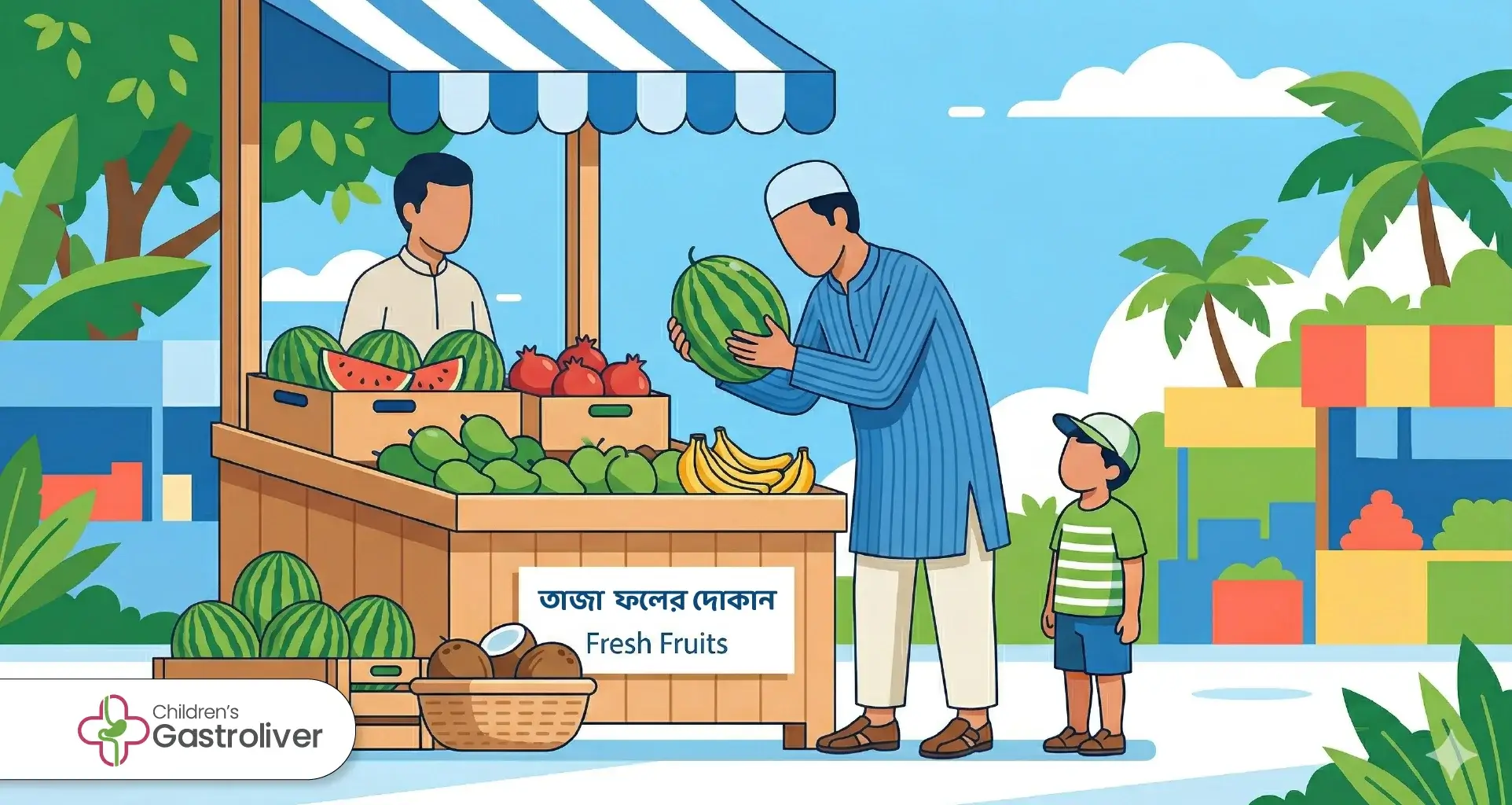
Summer in Dhaka brings a high demand for refreshing fruits, with watermelon being a household staple for keeping children hydrated. However, a sudden spike in severe stomach illnesses during these months often points to an overlooked culprit: chemically adulterated and bacterially contaminated watermelons.
At Bangladesh Shishu Hospital & Institute (BSH&I), Dr. Rafia Rashid and colleagues routinely observe a sharp surge in pediatric gastroenteritis linked to the consumption of summer fruits. Recent scientific research from top Bangladeshi institutions strictly confirms these clinical observations.
The Chemical Adulteration Trap
Unscrupulous practices are frequently used to artificially enhance the appeal of watermelons. According to a comprehensive food adulteration review by researchers at the Bangladesh University of Engineering & Technology (BUET), red dye is injected into watermelons to enhance the acceptability of the consumers. Furthermore, to mask premature harvesting, saccharine mixture was found to be injected into melons and watermelons to enhance sweetness artificially.
The health impacts of these chemicals are severe. These artificial coloring agents are associated with genotoxic effects, allergic reactions, and multi-organ tissue injury.
The Bacterial Threat (E. coli and S. aureus)
The physical act of injecting these fruits, or buying them pre-cut from street vendors, introduces dangerous pathogens directly into the fruit's flesh. A randomized controlled trial conducted in 2025 in Mymensingh, Bangladesh, evaluated the health effects of street-vended fresh-cut fruits.
The findings are alarming. The study found that among the tested fruits, watermelon had the highest prevalence of E. coli at 10%. Watermelons also showed a 24% prevalence of S. aureus. When children consume these contaminated fruits, the high bacterial load triggers rapid gastrointestinal distress. Specifically, E. coli demonstrated strong correlations with abdominal cramps, weakness, and diarrhea. Meanwhile, S. aureus was associated with symptoms such as nausea, abdominal cramps, and pain.
Smart Parent Guide: How to Keep Your Child Safe
- Buy Whole, Wash Well: Never buy pre-cut watermelons from street vendors due to the high risk of bacterial contamination. Buy them whole and wash the rind thoroughly at home before slicing.
- Look for Needle Marks: Carefully inspect the green rind for tiny puncture holes or soft spots where dyes or saccharine may have been injected.
- The Tissue Test: Rub a wet tissue on the red flesh. If the tissue turns bright, unnatural red (like paint), it indicates the presence of artificial chemical dyes.
If your child experiences severe vomiting, abdominal cramps, or diarrhea after eating summer fruits, do not delay treatment. Book a consultation with an experienced pediatric gastroenterologist for immediate, evidence-based care.
References
- Momtaz, M., Bubli, S. Y., & Khan, M. S. (2023). Mechanisms and Health Aspects of Food Adulteration: A Comprehensive Review. Foods. DOI: 10.3390/foods12010199
- Nahiduzzaman, F. N. U., Zarin, T., Chouhan, C. S., Rahman, M. Z., Khatun, M. M., Rahman, A. K. M. A., Islam, M. A., & Haque, M. A. (2025). Health effects of street vended fresh cut fruits: A randomized controlled trial in Bangladesh. PLoS ONE, 20(10), e0335979. DOI: 10.1371/journal.pone.0335979