
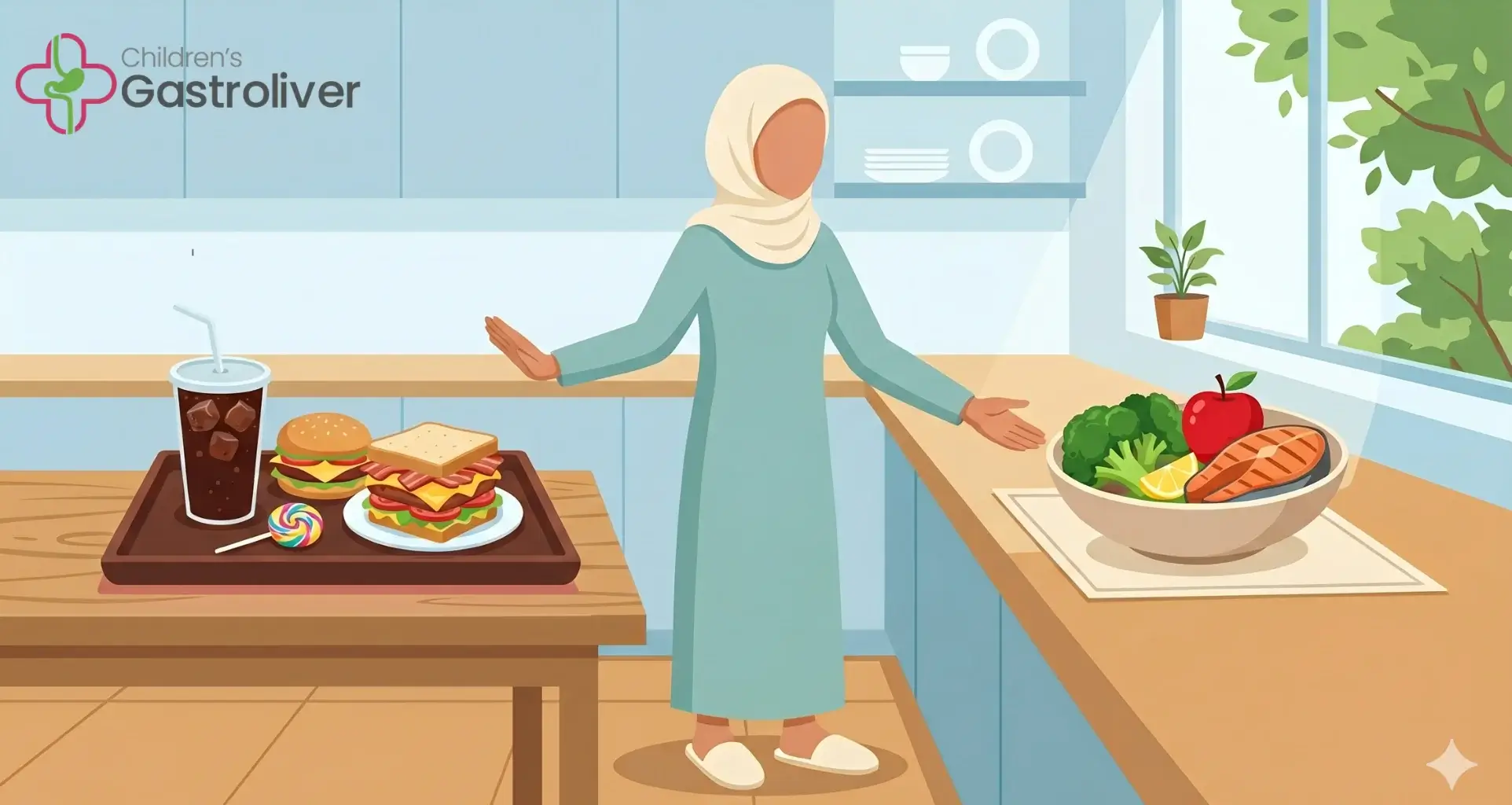
Protecting your child’s liver starts on their dinner plate. Are these common foods putting them at risk?
When we think of liver disease, we rarely think of children. Yet, Non-Alcoholic Fatty Liver Disease (NAFLD) is becoming increasingly common among young people. Fatty liver occurs when excess fat builds up in the liver cells, causing inflammation and long-term damage.
The primary culprit? Our modern diet. By making simple adjustments to what your child eats every day, you can protect their hepatic health. Here are 7 everyday foods that contribute to fatty liver:
The Sugar Trap
- 1. Sugary Drinks & Sodas: Liquid sugar is incredibly taxing on the liver. Soft drinks are loaded with high-fructose corn syrup. Because the liver is the only organ that can process fructose in large amounts, an overload forces the liver to turn that excess sugar directly into fat.
- 2. Packaged Fruit Juices: Don't let the word "fruit" fool you. Most store-bought juices have the fiber stripped away and contain just as much added sugar as soda, causing rapid spikes in blood sugar and liver fat accumulation.
- 3. Candy & Desserts: Regular consumption of high-sugar treats overwhelms the body’s metabolic system, directly contributing to weight gain and fatty deposits in the liver.
Processed and Refined Foods
- 4. White Bread & Refined Carbs: Foods made with highly refined white flour lack fiber. They are quickly digested, causing a rapid spike in blood sugar and insulin levels, which signals the liver to store fat.
- 5. Ultra-Processed Meats: Sausages, hot dogs, and packaged deli meats often contain high levels of sodium, preservatives, and unhealthy fats that promote inflammation in the liver.
- 6. Fast Food: Burgers and commercial pizzas are typically calorie-dense and loaded with a combination of refined carbohydrates and poor-quality fats.
Unhealthy Cooking Methods
- 7. Deep-Fried Foods: French fries, fried chicken, and common deep-fried snacks are cooked in oils at high temperatures, creating inflammatory compounds. Regular consumption stresses the liver and promotes fat storage.
The Takeaway
Protecting your child’s liver doesn't mean restricting food; it means swapping empty calories for whole, nutrient-dense foods like fresh vegetables, whole grains, and lean proteins.
If you are concerned about your child's weight, digestion, or liver health, proactive screening is the best approach. Book an appointment with ডাঃ রাফিয়া রশিদ at the Children's Gastroliver Center to establish a healthy, child-friendly nutritional plan.
References:
- American Liver Foundation. Nonalcoholic Fatty Liver Disease (NAFLD) in Children.
- World Health Organization (WHO). Guideline: Sugars intake for adults and children.
- World Health Organization (WHO). Healthy Diet Fact Sheet.