
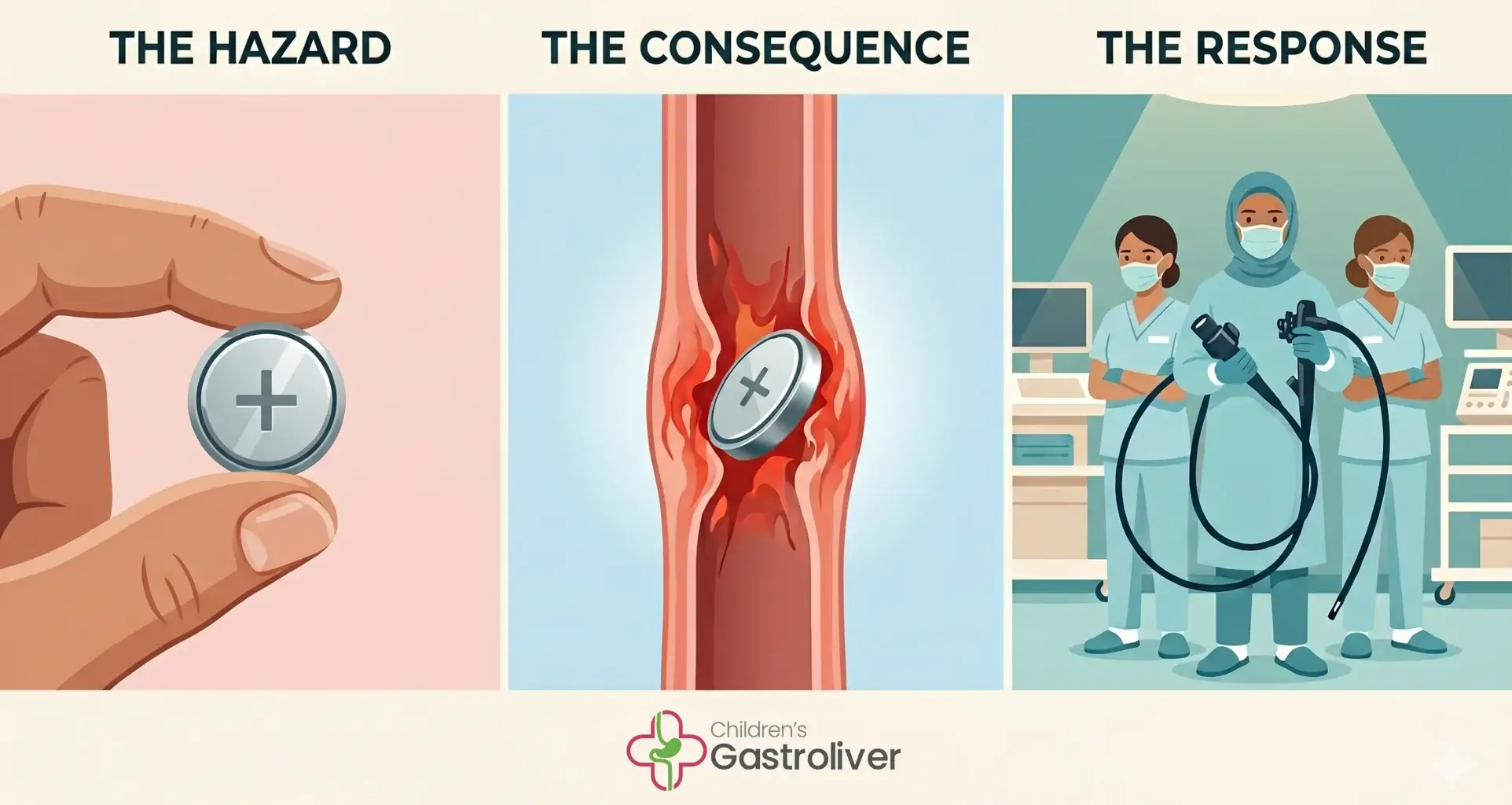
Small, shiny, and extremely dangerous—what every parent needs to know about button batteries.
As parents, we meticulously childproof our homes, locking away medicines and covering electrical outlets. However, one of the most severe hazards might be sitting right on your coffee table. Button batteries are ubiquitous, powering everyday items like remote controls, calculators, LED lights, watches, and key fobs.
While they look small and harmless, a swallowed button battery (known as button battery ingestion or BBI) is a life-threatening medical emergency.
The Silent Danger
Most button battery ingestions occur at home, particularly involving children under six years of age (with a peak at just one year old). The shiny surface of the battery can be very appealing for a curious child.
If swallowed, a button battery does not just block the airway; it triggers a chemical reaction. A battery lodged in the esophagus can cause severe, life-threatening tissue damage and burns in as little as 2 hours.
Identifying the Symptoms
Because children often swallow these batteries when no one is looking, diagnosis can be challenging. If you suspect your child has swallowed a battery, or if they exhibit any of the following unexplained symptoms, you must act immediately:
- Drooling or swallowing difficulty/pain.
- Coughing, irritability, or a high-pitched wheezing sound when breathing.
- Vomiting (sometimes with blood) or chest and abdominal pain.
- Fever or black, sticky, tar-like feces.
Immediate Action & The "Honey Protocol"
If you witness or suspect your child has swallowed a button battery, do not delay.
- Go directly to the nearest hospital emergency room immediately.
- Do NOT induce vomiting and do NOT let your child eat or drink water.
The Emergency Honey Protocol: If your child is over 12 months old and the ingestion occurred within the last 12 hours, you can administer household honey while in transit to the emergency department.
- Give 10 ml (approximately 2 teaspoons) of honey every 10 minutes, up to a maximum of 6 doses.
- Honey has been shown to reduce the severity of esophageal injury by forming a protective barrier and neutralizing the alkaline reaction from the battery.
Please note: This does not replace medical care; immediate battery removal under medical supervision is still necessary.
Prevention is Key
To protect your child, actively identify devices in your home that use these batteries. Ensure battery compartments are securely fastened, and always store or dispose of loose and discarded batteries safely out of sight and reach.
(Important Notice: Children's Gastroliver Center (CGC) operates strictly by appointment and does not have an emergency department. In cases of suspected battery ingestion, please rush your child to the nearest full-service hospital emergency room immediately.)
References:
- Federation of International Societies of Pediatric Gastroenterology, Hepatology, and Nutrition (FISPGHAN). (2026). Emergency Honey Protocol for Button Battery Ingestion.
- European Society for Paediatric Gastroenterology, Hepatology and Nutrition (ESPGHAN). Button Battery Ingestion in Children: Understand, Identify and Prevent.
- ESPGHAN & European Portable Battery Association (EPBA). (2023). Understand, Identify, Prevent: ESPGHAN Takes Action For #ButtonBatteryAwareness Day.
- ESPGHAN Gastroenterology Committee. (2021). The Dangers of Button Batteries: Parental Advice Guide.
- FISPGHAN. (2026). International Button Battery Awareness Day Campaign Guidelines.