
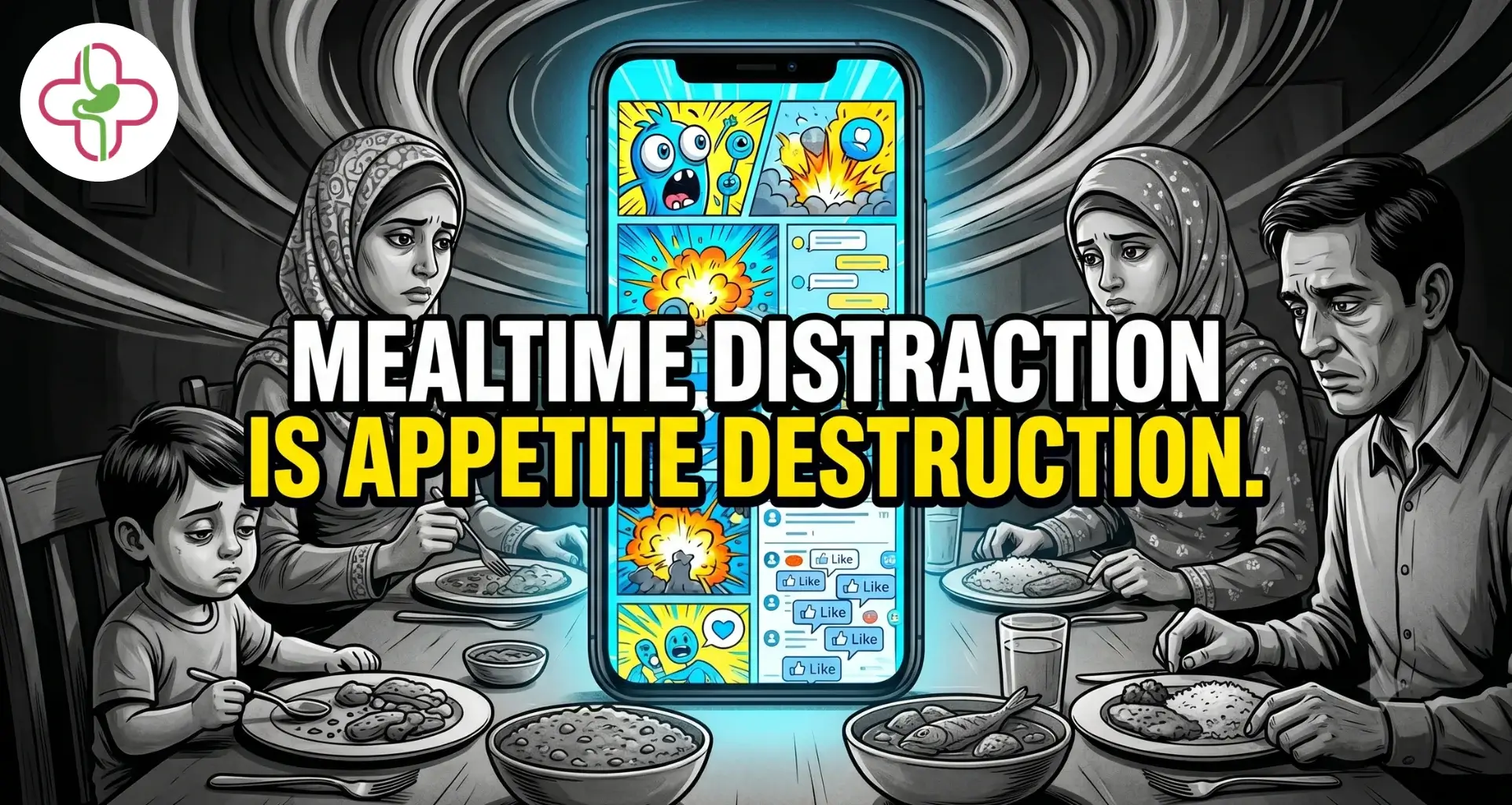
In today's busy lives, keeping children calm or getting them to finish a meal often makes smartphones our biggest reliance. A common complaint from parents visiting the Children's Gastroliver Center (CGC) is, "Our child simply won't eat without watching a mobile phone or cartoons."
The specialist physician at the Children’s Gastroliver Center (CGC), Dr. Rafia Rashid, always advises against feeding children while showing them screens. But why this advice? A recent UK study and new government guidelines have revealed striking facts about the impact of screen time on a child's brain development that every parent needs to know.
The Scientific Impact of Screen Time: What We Don't See
Scientists at the University of East London have been studying the impact of fast-paced screen time on toddlers' brains, revealing how it tricks their developing bodies:
- The ‘Fight-or-Flight’ Response: Fast-paced videos and rapidly changing cartoon scenes trigger the child's sympathetic nervous system—the fight-or-flight stress mode. Even while sitting completely still in a chair, the child's heart beats faster, and artificial energy is released into their muscles. This leaves them hyperactive and overstimulated.
- Slower Processing Speed: A child’s brain processes information up to 10 times slower than an adult's. Rapidly shifting screen content overloads their developing mind, making it incredibly difficult to process what they are seeing.
- Loss of Appetite and Digestive Issues: When a child eats while distracted by a screen, they do not consciously process what they are eating, how it tastes, or when they feel full. Over time, this psychological disconnection leads to a severe loss of appetite and chronic digestive complications.
Screen Time Guidelines by Age (UK Government, March 2026)
To protect early brain development, official guidance outlines strict limits for young children:
- Children Under 2 Years Old: They should have no screen time at all (unless it is a shared interactive activity, like video calling relatives).
- Children Aged 2 to 5 Years: Screen time should be limited to a maximum of 1 hour per day.
- The Golden Rule: There should be absolutely no screen time during mealtimes or in the hour before bedtime. Parents are also urged to choose slow-paced, age-appropriate content rather than fast-paced social media style videos.
Calming Tantrums with Phones: A Growing Danger
Handing over a smartphone when a toddler is crying or having a meltdown provides immediate peace, but evidence shows it makes the underlying problem worse. Relying on screens to soothe a child prevents them from learning how to regulate their own behavior and emotions. Consequently, the moment the screen is taken away, tantrums return with even greater intensity.
Bridging Technology and Reality: Practical Solutions
Completely isolating a child from technology is unrealistic in today's digital world, and abruptly snatching a phone away is rarely effective. Instead, try these gradual, practical steps to reshape their environment:
1. Tech-Savvy Solutions:
- For Android Users: Navigate to Settings > Digital Wellbeing & Parental Controls. Set an 'App Timer' for apps like YouTube or games so they automatically lock after the designated daily limit.
- For iPhone/iPad Users: Utilize Screen Time settings to implement 'App Limits' and 'Downtime', ensuring screens are locked during family hours and right before bed.
- YouTube Kids & Google Family Link: Shift your child away from standard streaming platforms to YouTube Kids for slower-paced, safer content, and manage their device access remotely using the Family Link app.
2. Establish Family Mealtimes:
Aim for at least one meal a day where the entire family sits together at the dining table. Keep the television turned off and place all smartphones entirely out of sight. Children learn healthy habits by observing their parents.
3. Practice Patience:
When you transition away from screen-fed mealtimes, your child may resist, throw tantrums, or eat very little for the first few days. Do not panic. This is a normal, temporary adjustment period. Staying consistent and patient will help their natural appetite and hunger cues return within 2 to 3 weeks.
May your child's physical and mental development be healthy and unhindered. For any concerns regarding pediatric gastroenterology, liver health, or childhood nutrition, we are always here by your side.