
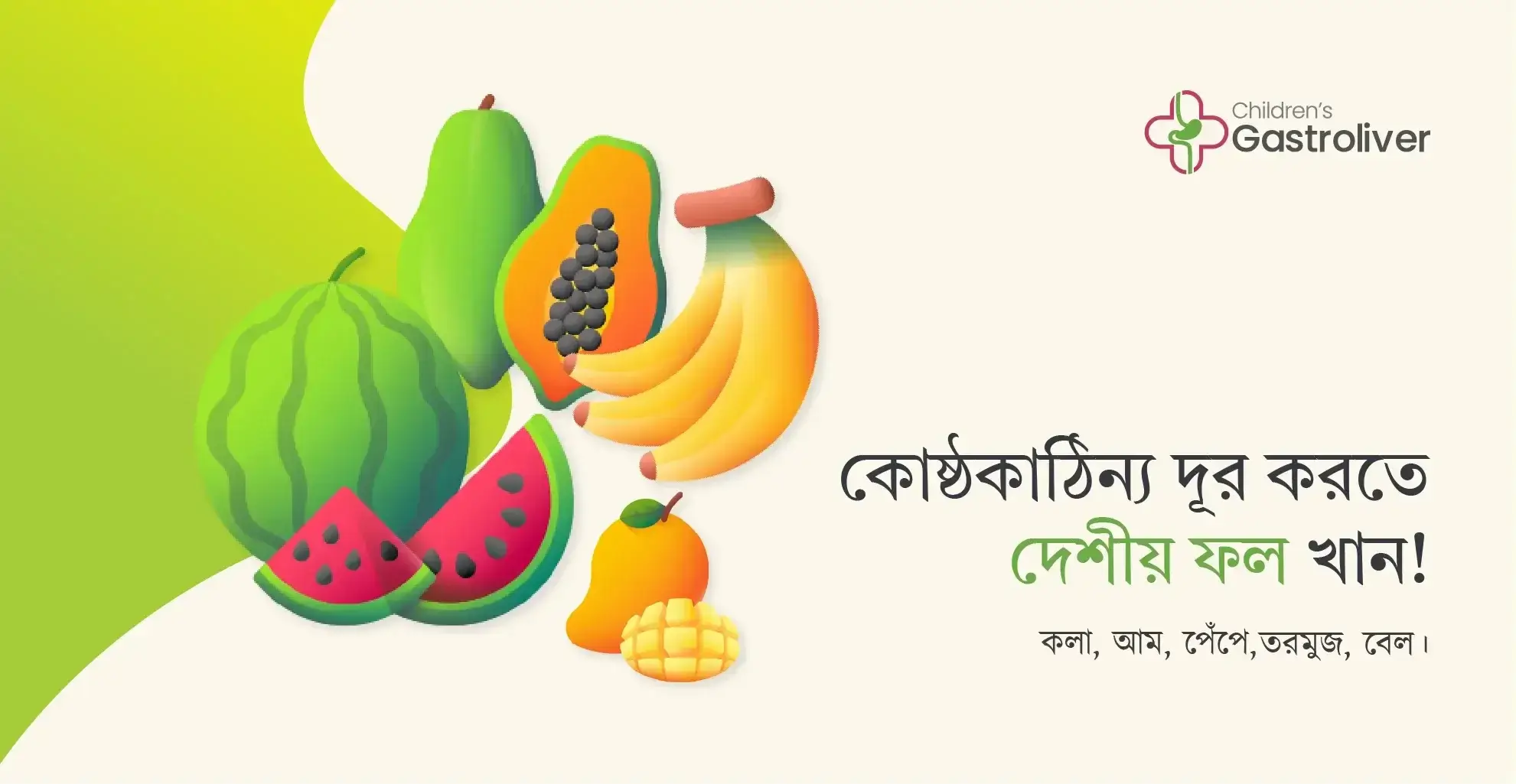
When a child suffers from constipation, many parents rush to buy expensive imported fruits like apples, grapes, or pears, believing "premium" means healthier.
However, at the Children's Gastroliver Center, Dr. Rafia Rashid advises the opposite.
The Problem with Imported Fruits
Imported fruits travel thousands of miles to reach Dhaka. To keep them "fresh" for weeks during transport, they are often:
- Harvested Prematurely: Before their natural nutrients and enzymes are fully developed.
- Chemically Treated: Sprays and wax coatings are often used to prevent rotting and maintain a shiny appearance.
- Preservative Heavy: These chemicals can irritate a child's sensitive gut rather than healing it.
The Power of Local (Indigenous) Fruits
Based on our clinical guidelines, here is what you should choose:
Local fruits, available right here in markets (New Market, Karwan Bazar), are harvested ripe and usually reach your plate within days. They are rich in natural fiber and digestive enzymes that act as natural laxatives.
Dr. Rafia's "Anti-Constipation" Food Chart
✅ YES: Eat These (Local & High Fiber)
- Fruits: Ripe Papaya (Paka Pepe), Wood Apple (Bel), Watermelon (Tormuj), Mango.
- Vegetables: Okra (Dherosh), Stem Amaranth (Data Shak), Spinach/Greens (Pui Shak).
- Grains: Red Rice, Red Flour (Lal Atta), Isabgol.
❌ NO: Avoid These (Binding & Processed)
- Imported/Hard Fruits: Apples, Grapes, and Guava (seeds can be hard to digest for some).
- Processed Carbs: White flour (Maida), Noodles, Suji, Biscuits.
The Golden Rule: If it comes in a packet or traveled across the ocean, think twice. If it grew in a Bangladeshi village, it's likely medicine for your child's gut.