
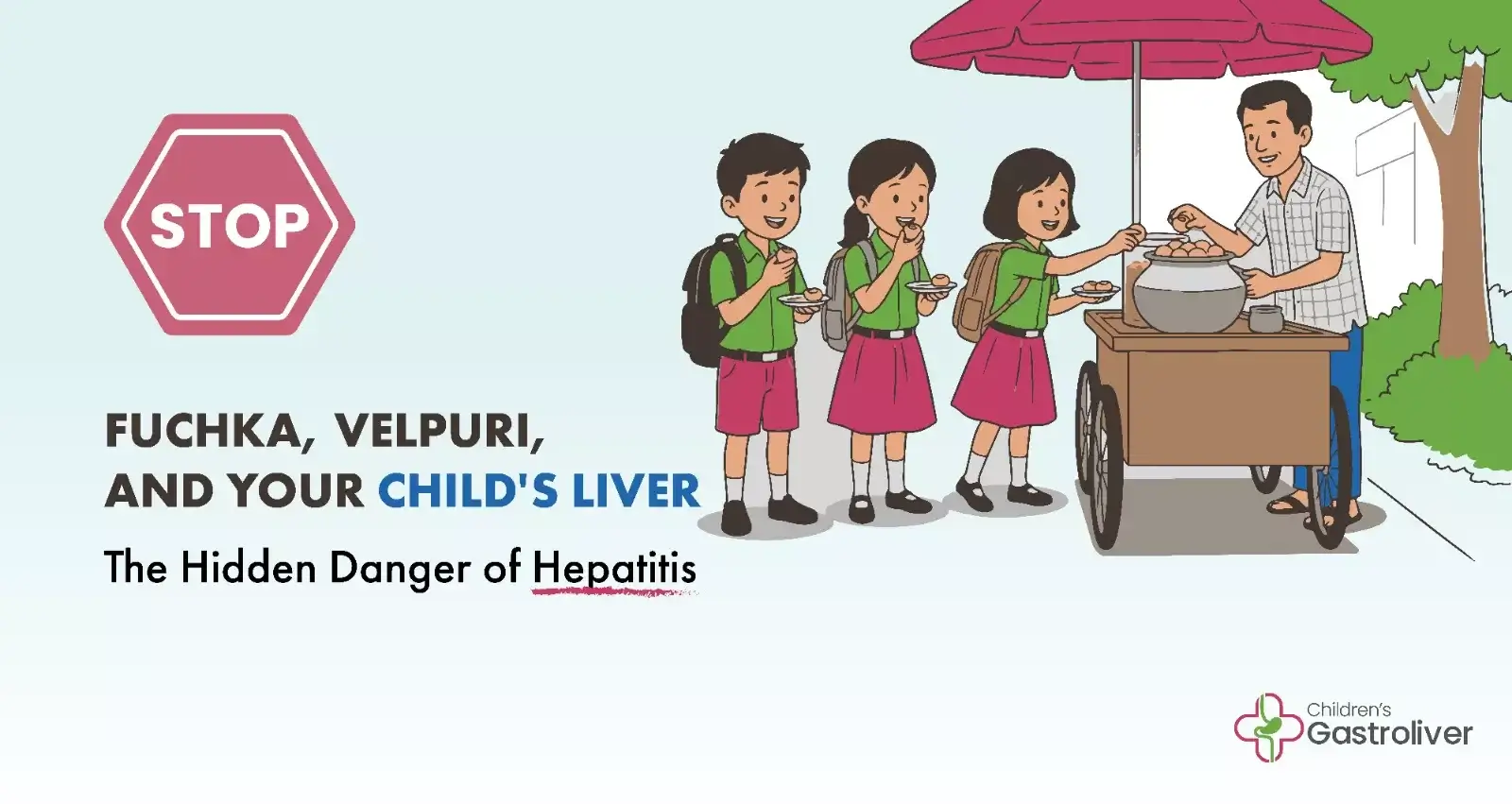
As the school bell rings in Dhaka, a familiar scene unfolds: groups of happy children gathering around the Fuchka or Velpuri cart. For most parents, this is just a part of childhood.
But for us at the Children's Gastroliver Center, this scene carries a different weight. We know that the plate of street food is often the starting point of a serious medical journey—one that begins with "পেট খারাপ" and can sometimes end in Acute Liver Failure.
Dr. Rafia Rashid explains why street food is the primary driver of Hepatitis in children and shares what she learned from her years of research at Bangladesh's top medical institutes.
More Than Just "Bad Stomach"
Most parents worry about diarrhea. But the silent danger lurking in street food is Hepatitis A and E. These are water-borne viruses that spread through contaminated water, ice, and unwashed hands.
When a child eats Fuchka, they aren't just eating the shell; they are drinking the "ফুচকার টক" (sour water). In many street stalls, this water and the raw ingredients (onions, coriander) are contaminated with microscopic amounts of stool (feces), carrying the virus directly into your child's liver.
Research Findings: The Link to Liver Failure
This link between street food and severe liver disease isn't just a theory; it is a reality Dr. Rafia observed closely during her tenure at the nation's apex centers.
1. The Warning from Bangladesh Medical University (PG Hospital)
While conducting research at Bangladesh Medical University (PG Hospital), Dr. Rafia investigated the causes of sudden, life-threatening liver failure in children.
- What She Found: Her study, published in the Dhaka Shishu Hospital Journal, identified Hepatitis A as the leading cause of pediatric Acute Liver Failure in Bangladesh.
- The Connection: A significant number of these critical children had a history of consuming street food and unsafe water. It highlighted a terrifying reality: a common infection can turn deadly without warning.
2. Insights from Shishu Hospital
Later, as an Assistant Professor at the Bangladesh Shishu Hospital & Institute (BSH&I)—the largest dedicated children's hospital in the country—Dr. Rafia led a team to monitor how these infections progress.
- What She Found: In her study published in Gastroenterology, Hepatology and Functional Medicine, she documented that while many children recover with rest, a specific group develops dangerous complications like Ascites (fluid in the tummy) and Encephalopathy (brain confusion).
Why School Gates are High-Risk
Reports supported by the Bangladesh Agricultural Research Council (BARC) have found harmful bacteria like E. coli in almost all samples of school-gate Fuchka and Velpuri. This confirms that the hygiene practices—from the water used to mix the tamarind to the vendor's handwashing habits—are dangerously inadequate.
When to Seek Help: Warning Signs
Because Dr. Rafia has seen how quickly "simple" jaundice can deteriorate, she advises parents to be vigilant.
Consult a doctor immediately if your child has:
- Deep Jaundice: Eyes looking orange or deep yellow.
- Behavior Changes: Unusual sleepiness, confusion, or irritability (a sign the liver is affecting the brain).
- Severe Vomiting: Inability to keep water or food down.
- Bleeding: From the nose, gums, or blood in the stool.
Protecting Our Children
We cannot ban street food, but we can make smarter choices.
- Strict "No" to Raw Water: Teach children never to drink the raw "ফুচকার টক" or free jar water on the street.
- Heat is Safety: Prefer hot, freshly cooked snacks (like hot Singara) over raw mixes like Velpuri.
- Vaccination: Hepatitis A vaccines are available and highly effective.
- Handwashing: As emphasized by National Nutrition Services (NNS), washing hands with soap before eating is a non-negotiable habit.
References
- Rashid R et al. Hepatitis A: Leading Cause of Paediatric Acute Liver Failure in Bangladesh. Dhaka Shishu (Children) Hospital Journal. 2021.
- Rashid R et al. Evaluating the clinical course of hepatitis A in children. Gastroenterol Funct Med. 2024.
- World Health Organization (WHO) – Hepatitis A & E Fact Sheets.